
Family Mediation in Surrey & White Rock
Mediation is a confidential, out-of-court process where a neutral third party helps separating partners reach fair agreements on parenting, support and property, without the stress and cost of litigation.
Last updated
Why Choose Mediation?
Reduce Conflict
Avoid adversarial court battles and preserve family relationships.
Cost-Effective
Typically far less expensive than going to court.
Faster Resolutions
Schedule sessions on your timeline, not the court's.
Flexible & Customized
Agreements tailored to your family's unique needs.
Confidential
Keep your family's matters private, off the public record.
Empowering
You stay in control of the outcomes, not a judge.
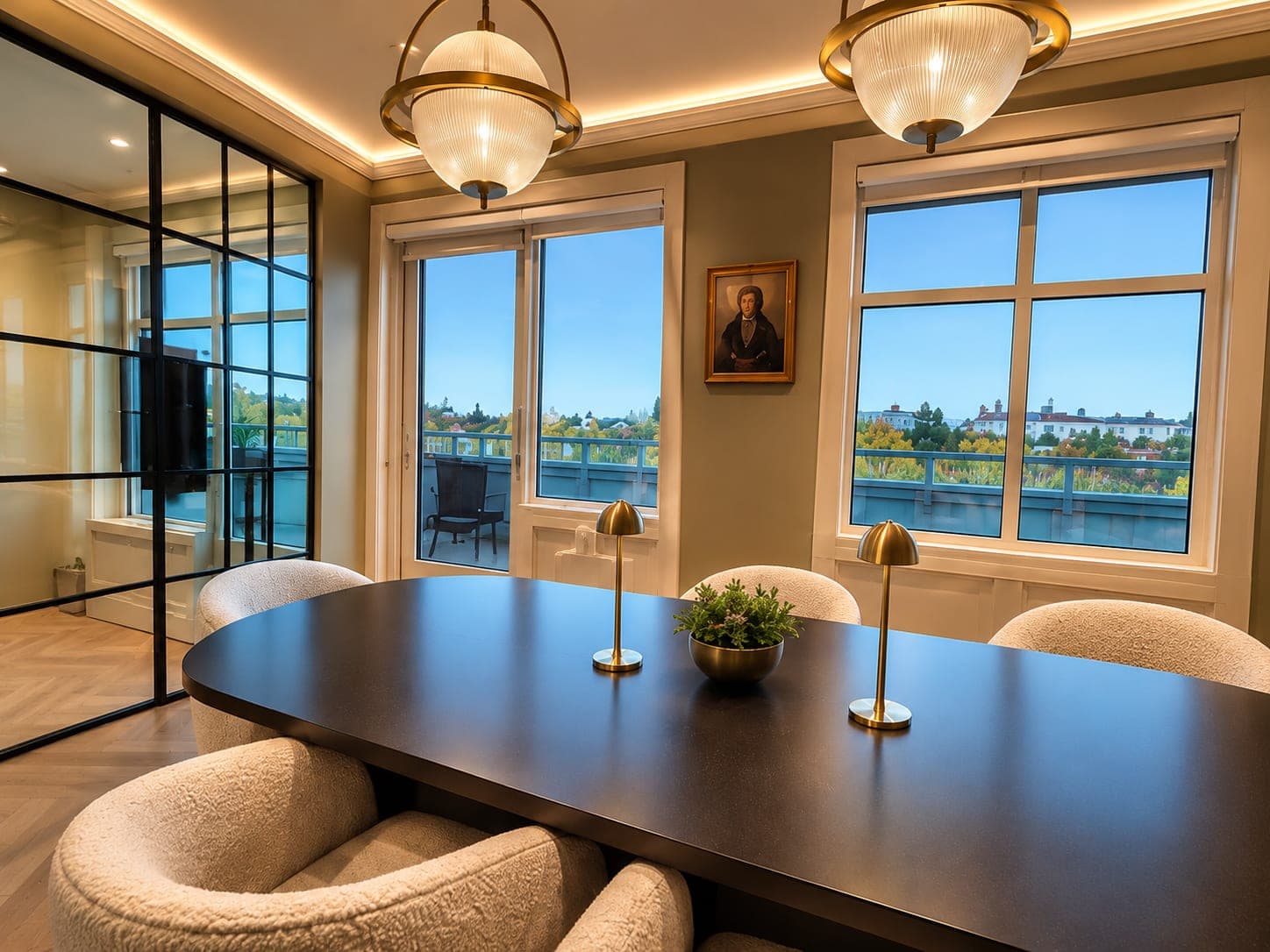
Where we meet
A room built for talking, not for trial
Mediation sessions take place in our meeting room at 3108 Croydon Drive in South Surrey, or by video from wherever you are. Two people, one mediator, a table between you, and no gallery. Sessions run two to eight hours depending on how much there is to work through, with breaks and private caucuses as needed.
Find the officeThe Mediation Process
Five clear steps from first call to final resolution. Click each step to see what happens, how long it takes, and what to bring.
Step 1: Consultation
Typical duration: 30 minutes, freeWe meet with you (and the other party, if both agree) to understand your situation and explain how mediation works, including whether it is a safe and suitable fit for your family.
What to bring: A short summary of your situation and the issues you want resolved.
Mediation vs. Court
| Factor | Mediation | Court |
|---|---|---|
| Typical cost range | Shared mediator fee, usually a fraction of litigation | Each side pays their own counsel through trial ($$$$) |
| Timeline | Weeks to a few months, on your schedule | Often 1–3+ years on the court's schedule |
| Privacy | Confidential process | Public court record |
| Control over outcome | You and your ex decide together | A judge decides for you |
| Impact on children | Lower conflict, preserves co-parenting | Adversarial process can escalate conflict |
| Appealability | Agreement can be varied by consent as life changes | Appeals are limited, slow and expensive |
Why SiLaw Group as Your Mediator?
- An accredited Family Law Mediator: Sandy Sihota is trained and certified by the Law Society of BC to guide you safely through conflict.
- Legal expertise + compassion: deep legal knowledge with a trauma-informed, respectful approach.
- Local to BC: we know BC family law, court practices and community resources.
- Legal Aid accepted: qualifying clients through Legal Aid BC programs.
- English & Punjabi: mediate in the language you’re most comfortable in.
- By video or in person, across the region: we mediate for couples in Surrey, White Rock, Langley, Delta, Abbotsford and Vancouver, and anywhere in BC by video.
Free download: Preparing for Your First Mediation Session
A one-page checklist of the documents, numbers and decisions to bring so your first session moves fast.
Open the Checklist (printable)Co-mediation with Kamaljit Kaur Lehal, KC
For complex or multi-party family matters, Sandy Sihota co-mediates with Kamaljit Kaur Lehal, KC of Lehal Law in Delta, BC. Two mediators work your case as one team, and both are fluent in Punjabi, so sessions can run in English, Punjabi or both without an interpreter. Lehal Law lists Sandy as its co-mediator for family law matters on its co-mediation page.
About Kamaljit Kaur Lehal
From her published profile at Lehal Law.
- Law degree from the University of British Columbia (1989); called to the BC Bar in 1990
- Opened her own firm, Lehal Law, in 1992
- Mediation training through Harvard Law School's Program on Negotiation
- Certified mediator and arbitrator for civil and family law matters
- Member of Mediate BC's Civil Roster
- Over 10 years of mediation experience, with a focus on the South Asian community
- Member of the BC Review Board, 1998 to 2010 (Alternate Chair from 2000)
- Member of the Civil Resolution Tribunal, 2015 to 2019
- Director of Options Community Services since 1996; Chair, 2019 to 2024
- Fluent in Punjabi; also speaks Hindi
How a co-mediation with us runs
- Screening first. As with every mediation we run, each party speaks with a mediator privately before any joint session, so safety concerns and power imbalances are caught early.
- Two mediators, one team. While one mediator asks questions, the other observes and takes notes; one can track the details while the other keeps the big picture in view.
- Parallel caucusing. When the parties need to meet separately, each mediator can sit with one party at the same time instead of one mediator shuttling back and forth. Multi-party matters, such as those involving extended family, move faster this way.
- A built-in second opinion. The mediators consult each other as the session goes, so a stuck issue gets two perspectives in the room.
- Your agreement, in writing. Terms you reach are recorded so they can become a separation agreement or consent order, with independent legal advice for each of you before signing.
Lehal Law describes its co-mediation fee as comparable to what an experienced single mediator charges. We confirm the fee arrangement with both parties before the first session.
Or contact Lehal Law directly: lehal.mediations@gmail.com · 604-596-1321. SiLaw Group: (778) 381-9977.
Further Reading on Mediation
ਪੰਜਾਬੀ ਵਿੱਚ ਵਿਚੋਲਗੀ ਚਾਹੀਦੀ ਹੈ? Mediation is also available in Punjabi, directly with our accredited mediator, no interpreter needed.
Common questions
Mediation FAQs
Is mediation legally binding?
What if my ex won't participate?
Is mediation suitable where there has been family violence?
How much does family mediation cost in BC?
Do I still need my own lawyer if we mediate?
What is co-mediation, and when would we use two mediators?
Can we mediate if we already have a court case started?
Ready to Take the Next Step?
We’re here to help you resolve your family matters with clarity, confidence and care.